
FACTS ABOUT BEES
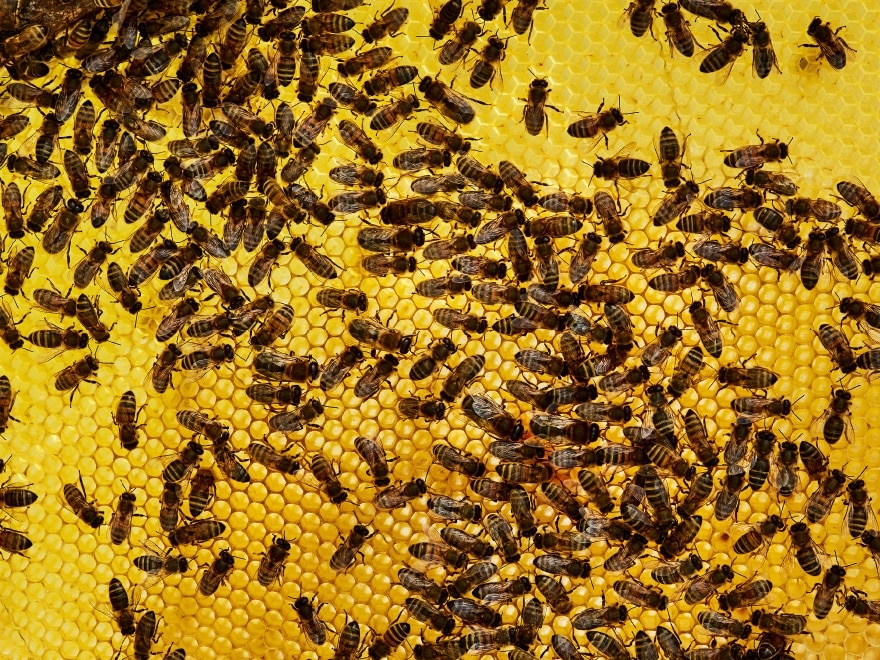
A beehive can consist of 50–60,000 bees in the summer. A colony with one queen, male bees (drones) and worker bees is called a bee colony. They all have different tasks and positions, and can in many ways be compared to a human society. Honningcentralen has approximately 1,500 members, who on average have about 30 beehives. This means that in total there are approximately 2.5 billion bees working for Honningcentralen. We call ourselves Norway’s largest workplace…
How the bees live
The bee colony consists of one queen, several thousand worker bees (female bees) and several hundred drones.
The drones have only one task: to fertilize the eggs of the queen. The female bees have a fairly clear career plan, starting with general work such as cleaning and tidying the cells in the wax combs. They then take responsibility for feeding the larvae, followed by building wax combs, and later serve as guard bees that protect the entrance to the hive against enemies (including wasps) and receive pollen and nectar from the forager bees. Finally, they reach the top of the worker bees’ career ladder as forager bees (those that collect nectar and pollen) or as scout bees, which search for good areas with pollen and nectar.
The queen has her own court of worker bees who ensure that she is fed, washed and cared for. Her job is to produce new bees. She produces a pheromone that attracts the drones, and the luckiest of them get to mate with her. The queen can lay up to 2,000 eggs per day during the season. The queen lives for 2–4 years, while the drones die after mating.
What does the queen bee eat?
The queen develops in a separate chamber. She is fed royal jelly throughout the entire larval period. Royal jelly is produced by young bees and is a particularly nutritious feed that is also given to the other bee larvae during the first part of the larval stage.
In Norway we have three different honey bees: Brown bee, Buckfast and Carniolan, which is the most common. It is considered peaceful and productive.